The Board

What South Korea built in the American consumer market, and what it can teach Asian companies planning to follow.
In 2019, a Korean conglomerate paid $1.84 billion for the company that makes Red Baron frozen pizza. Five years later, Korean dumplings outsell every other brand in American freezers. The pizza company is how they got there.
That acquisition does not make sense until you see the rest of the board.
Korean products are now in every aisle of every major American retailer, not as specialty imports but as default choices: Shin Ramyun in the soup section at Walmart, not the Asian food section. Bibigo dumplings in the main freezer case at Kroger. Gochujang, the fermented chili paste, sold under Target’s own store brand alongside Heinz and French’s. Samsung televisions in 28% of the world’s living rooms. Hyundai and Kia selling more electric vehicles in America than Ford.
None of this was supposed to happen. Forty years ago, “Korean” was a punchline in the American car market and a blank space in the grocery store. The shift from there to here is one of the most complete market transformations any country has pulled off, and few people can explain the mechanism behind it.
Korean executives can. They have been describing it for decades, using the vocabulary of a board game.
Scope note: This piece tracks Korea’s deliberate export strategy: the corporations, government agencies, and entertainment companies that targeted the American market from Seoul.
The Korean-American diaspora built its own infrastructure over sixty years, independently and with its own money. Where Seoul’s exports benefited from that groundwork, we say so. The diaspora story is not this story.
Act I · The Game
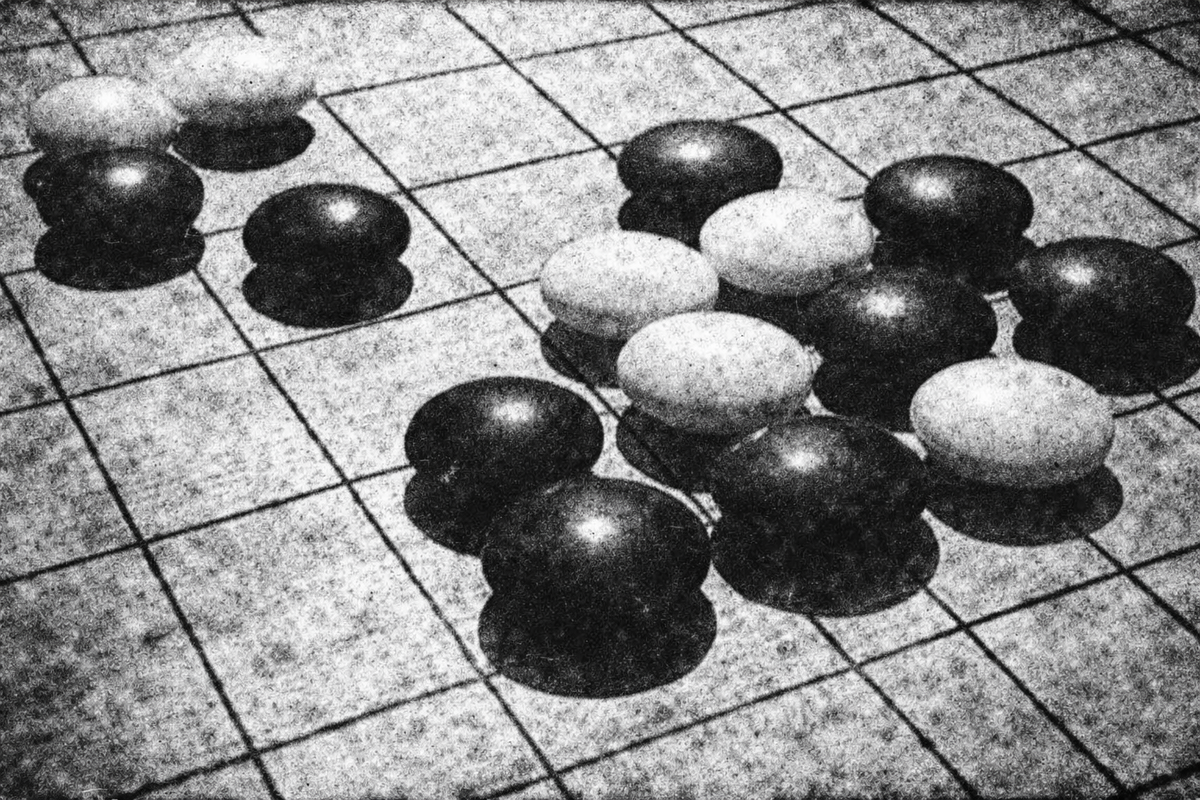
The game is called Baduk (바둑). You might know it as Go or Weiqi.
Samsung’s chairman Lee Kun-hee built his management philosophy around it.
“The 21st century we live in is led by a group of geniuses. Ten decent baduk players will never win against one great baduk player.” - LK-h
SK Group’s chairman invoked it during the 2009 financial crisis.
“The goal that SK Group has in mind is survival. Just as they say in baduk, reflect upon yourself before attacking the opponent, we need to wait for the time of investment because the financial world is going through some rough times at the moment.”
More than twenty Baduk terms have crossed into everyday Korean business language, the way sports metaphors saturate American boardrooms. When a Korean executive says jeongseok (정석), she means the textbook play, the move so standard it barely needs discussion. The word comes from Baduk.
You do not need to learn the game. You need three facts about it.
Stones are placed on the board and never moved. Once you build a factory, open a store, or launch a product, it stays where it is. Commitments do not relocate.
Both players are still on the board when the game ends. There is no checkmate. The winner controls more territory; the loser still controls territory. This is how markets actually work.
A stone alone can be captured. Stones connected to each other cannot. A group that has enough internal breathing room becomes permanent. In Baduk, that is called a living group.
Isolated stones die. Connected stones live. Everything that follows turns on that distinction.
Scattered Stones
Samsung Electronics America opened in 1978. LG’s factory in Huntsville, Alabama started production in 1982. Both competed on a single advantage: price. The televisions were adequate and the brand names carried no weight; in a market where Sony and GE owned the category, Korean electronics were what consumers bought when they couldn’t afford the real thing.
First stones on the board, cheap, exposed, and unremarkable.
The Hyundai Excel launched in 1986 at $4,995, the cheapest new car in America. It sold 168,882 units in its first year, a genuine sensation. By 1989, it was a national joke: the car rusted, the transmission failed, and Consumer Reports ranked it among the worst vehicles on the market. “Hyundai” became shorthand for cheap and broken.

The stone was on the board. It was not going anywhere, and neither was the dealer network Hyundai had built to sell it. What looked like a humiliation was actually a sunk cost that would take twelve years to pay off.
Nongshim opened a ramyun factory in Rancho Cucamonga, California in 2005: Korean instant noodles manufactured on American soil for the first time. Dr. Jart+ placed two BB creams in ten Sephora stores in early 2011, the first Korean beauty brand at a major US prestige retailer.
Both stones were placed by Seoul. Both opened channels that would matter enormously later. And one of them got captured: Estée Lauder acquired Dr. Jart+ in 2019 and the brand has weakened under Western ownership since. But the door it opened at Sephora stayed open. COSRX, TIRTIR, Anua, and Beauty of Joseon all walked through it.
Stones can be taken, but the territory they create can outlast the stones themselves.
Meanwhile, Korean-American families were building their own infrastructure with their own money: H-Mart, founded in Queens in 1982, now operates 97+ stores across twenty states.
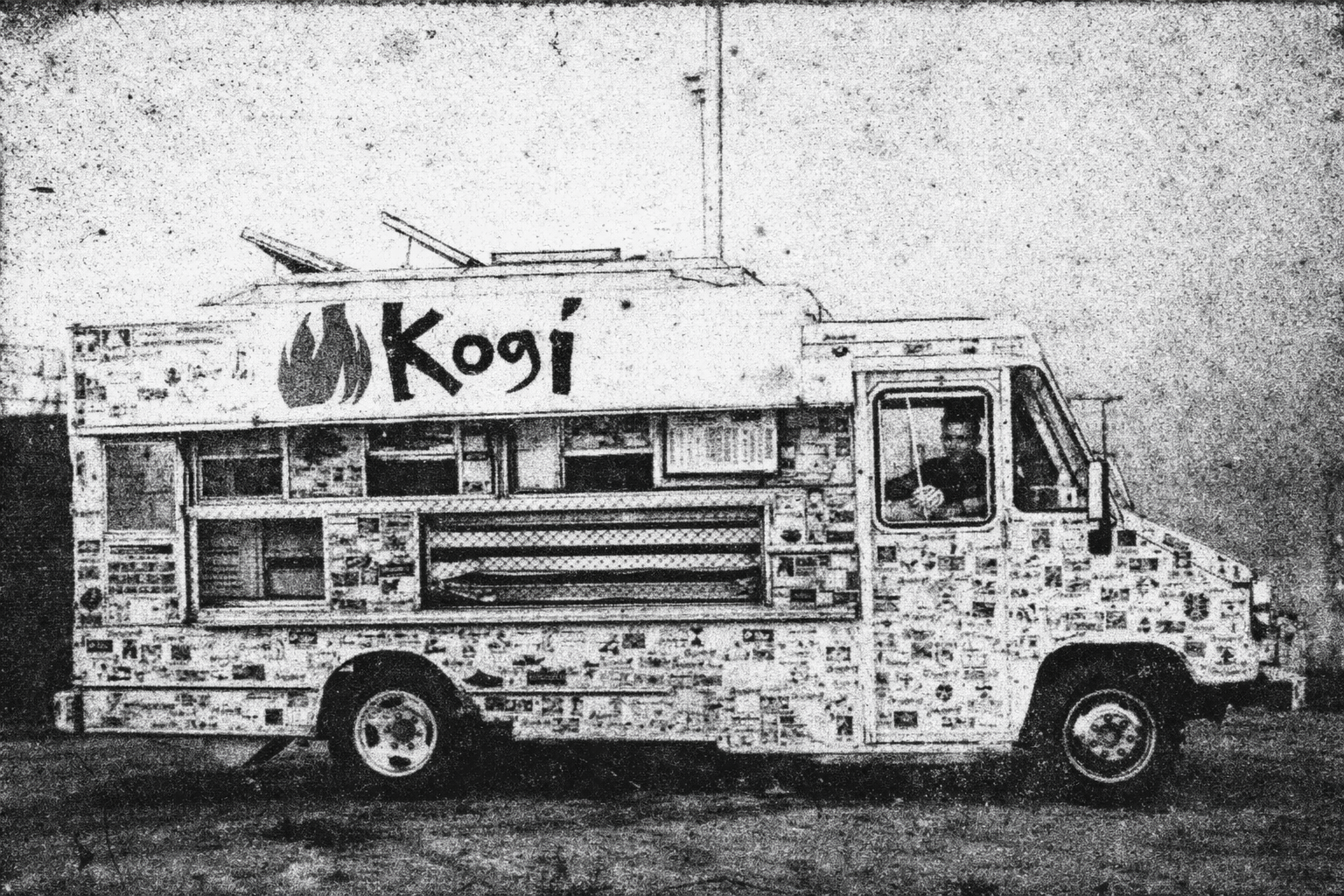
Koreatown restaurants in LA and New York were teaching non-Korean Americans what kimchi tasted like. And in 2008, Roy Choi (Korean-born, raised in Los Angeles, trained at the Culinary Institute of America) launched the Kogi BBQ truck, wrapping Korean short rib and kimchi inside a Mexican taco. It was the California roll of Korean food: a fusion format that made unfamiliar flavors accessible inside a familiar vehicle, invented by a Korean-American chef, not an export strategist in Seoul. None of this was Seoul’s doing. These were not export stones; they were already on the board when the exports arrived, and they made the landing softer.
Two pivots, both bets.
In 1993, Samsung’s new chairman Lee Kun-hee flew his senior executives to Frankfurt and told them to change everything except their wives and children.

Two years later, Samsung employees destroyed 150,000 defective cell phones in a bonfire at the Gumi factory. The event was staged for internal consumption, but the commitment behind it was real: Samsung would compete on quality or not at all.
In September 1998, Hyundai announced a 10-year, 100,000-mile powertrain warranty on every vehicle sold in the United States, the most aggressive warranty in the American market. The message was not subtle. Hyundai was telling American buyers: the cars you remember are not the cars we are selling now, and we will prove it by absorbing the risk ourselves.
Both moves took roughly a decade to show up in market share. Samsung did not overtake Sony in global television sales until 2006. Hyundai did not enter the top five US automakers until well into the 2010s. Quality pivots work on geological time.
The board at this point:
Samsung televisions. LG appliances. Hyundai cars. A ramyun factory in California. A BB cream at Sephora. Two quality pivots underway but not yet visible to consumers. And in the background, H-Mart growing quietly from a corner grocery in Queens to a regional chain.
These stones shared a country of origin and nothing else. A Samsung TV did not make a consumer more likely to buy a Hyundai. A bag of Shin Ramyun did not generate curiosity about Korean skincare. Each stone existed in its own category, explained by its own competitive logic, vulnerable to its own competitors. There was no Korean “position” in the American market. There were Korean products, scattered and alone.
If the story ended here, it would be a case study in competent but unremarkable international expansion. A few good products in a few categories, the way Taiwan has TSMC and bubble tea, or the way Thailand has Red Bull and Muay Thai. Interesting footnotes, not a structural position.
The story does not end here.
Stones started landing on a completely different part of the board.

Oldboy, a revenge thriller, split the Grand Prix at Cannes in 2004. The Host, Bong Joon-ho’s monster film, broke every Korean box-office record in 2006. Rain, then the biggest pop star in Asia, sold out Madison Square Garden the same year, performing for a crowd that American media barely covered. All three were produced in Seoul and exported.
The Wonder Girls hit #76 on the Billboard Hot 100 in 2009, the first Korean act to chart.

“Gangnam Style” peaked at #2 in 2012 and was filed immediately under novelty, a viral joke from a country that makes good televisions.
In 2012, nobody connected these events. Samsung made TVs, Korea made pop music, Korea made cheap cars that were getting less cheap. These were unrelated facts about a mid-sized Asian economy, and there was no framework that made them feel like parts of one story.
That framework existed, but almost nobody outside Korea knew its name.
Act II · The Position
Before the connections, the numbers. By 2025, the scattered stones had hardened into market share that is difficult to overstate and impossible to ignore.
Automotive
11.3% · Hyundai-Kia, US auto market, 2025
The car that rusted. Hyundai and Kia combined held a record 11.3% of the US auto market in 2025, selling 1.84 million vehicles. In January 2026, Kia outsold Hyundai in the United States for the first time. Together they are the second-largest EV seller in America behind Tesla, running two brands across price segments (Ioniq 5, EV6, EV9) while Ford and GM retreat from EV commitments. When the EV market cooled in 2024, Korean manufacturers pivoted to hybrids and sold 331,000 units, a 48.8% surge in one year.
From punchline to structural position in thirty-nine years.
Consumer Electronics
28.3% · Samsung, global TV revenue share, 2024
Samsung has been the world’s largest television manufacturer for nineteen consecutive years. In 2024: 28.3% of global TV revenue, 28.7% of the ultra-large premium segment (75 inches and above). LG holds second place at 16.1% and controls over 52% of global OLED production. Sony, the company that invented the modern television category, ranks fifth at 5.4%, behind two Chinese manufacturers.
The one place Korean electronics lost ground: smartphones. Samsung’s US share fell to 13% in Q4 2025, while Apple took 69%. A company can dominate every screen in the house except the one in the pocket.
Entertainment
Korean studios produced one in five non-English original TV seasons on Netflix in 2025. Netflix committed $2.5 billion to Korean content over four years.

The Billboard Hot 100 charts the acceleration better than any revenue metric: no more than one Korean entry per year from 2009 to 2016. Two in 2017. Five in 2018. Seventeen in 2020. Twenty-two in 2022. The curve describes an industry reaching production scale.
K-Beauty
$1.7B · US beauty imports from South Korea, 2024 · USITC customs data
In 2024, the United States imported $1.7 billion in beauty products from South Korea under HS code 3304, a customs figure rather than a survey estimate: physical products crossing a border, measured by weight and declared value. That figure made Korea the largest foreign source of US beauty imports for the first time, surpassing France. By 2025, Korean beauty exports to the US reached $2.2 billion, and the US overtook China as Korea’s top cosmetics destination.
Automotive, electronics, entertainment, beauty, food: five categories, each with significant and growing Korean market share, none of them dependent on the others for revenue, all of them in different aisles of different stores reaching different consumers.
Those numbers describe the position, but they cannot explain it. Market share describes what happened; it cannot explain why these particular market entries became permanent when most foreign market entries fade, get acquired, or stall at the specialty-import ceiling.
The explanation requires the board.
Act III · Connections
After 2012, the stones on the board began to connect.
The connections were emergent, not engineered. Samsung’s brand rehabilitation had nothing to do with Nongshim’s grocery distribution. K-pop concert tours were not coordinated with gochujang sales. But Korean products, Korean entertainment, and Korean cultural interest were all growing in the same consumer market at the same time, and American consumers started doing what consumers do: they noticed patterns.
A person who watched Parasite became curious about Korean food. A teenager who followed BTS tried Korean skincare. A family that bought a Hyundai noticed Shin Ramyun at the grocery store and thought, I keep seeing Korean things everywhere.
Baduk has a term for this: moyang (모양), a shape forming on the board, not yet secured as territory, but implying it. Three living groups emerged: food, entertainment, and beauty.
Food / Living Group
$1.84B · CJ CheilJedang → Schwan’s Company, 2019
CJ CheilJedang’s $1.84 billion purchase of Schwan’s Company in 2019 was the single most consequential move on the food board, and it had almost nothing to do with Korean food.
CJ bought seventeen manufacturing plants, ten distribution centers, and the direct-store-delivery network that put Red Baron pizza and Freschetta into every American freezer aisle.
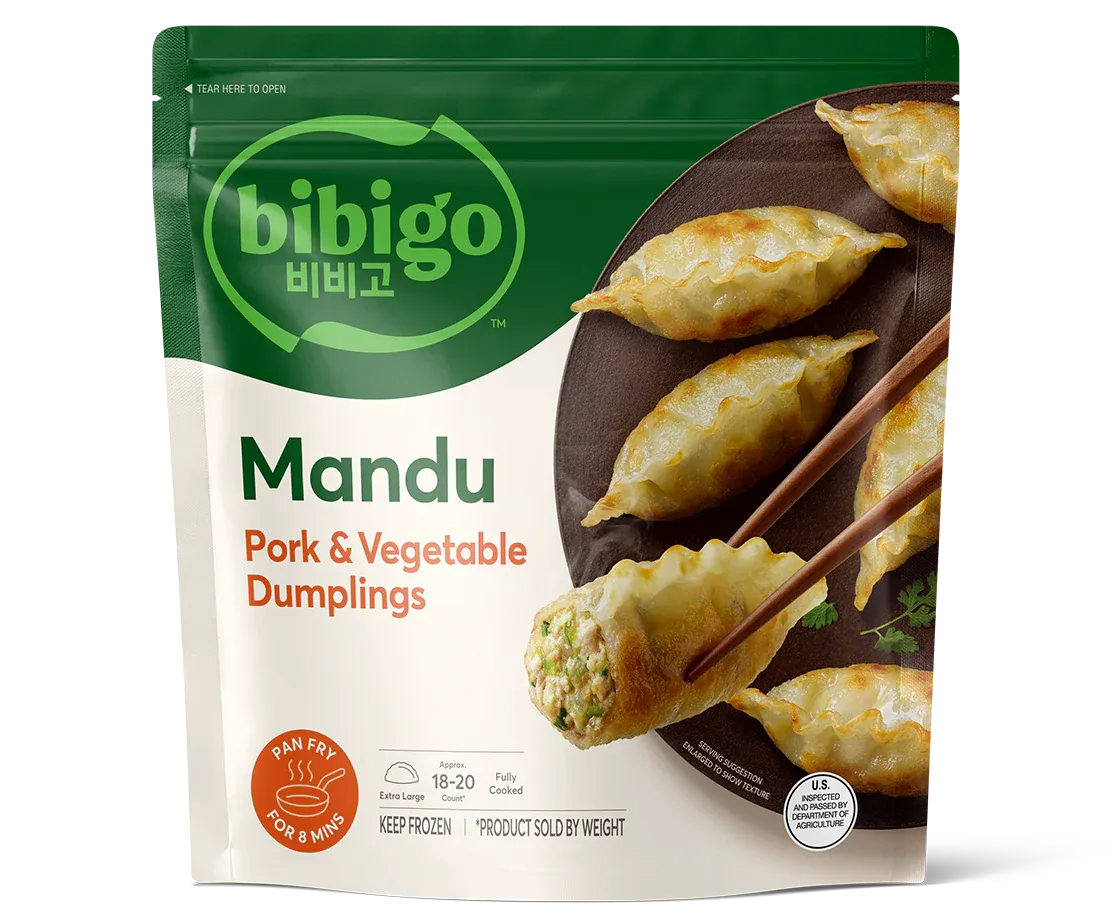
Then it pushed Bibigo dumplings through that same network. Overnight, Bibigo went from a Costco club product to a brand in 30,000+ stores. By 2024, CJ’s North American food revenue reached roughly $3.4 billion, though most of that is still Red Baron and Freschetta.
The Korean food component, primarily Bibigo, is likely $300–500 million. CJ bypassed grocery buyers entirely by acquiring the infrastructure those buyers already trusted and loading Korean food onto it.
Nongshim expanded alongside: a second US factory in 2022, 850 million units of annual capacity, and around 2024, Shin Ramyun finally migrated from Walmart’s Asian Foods section to the main soup aisle.
Gochujang crossed the threshold where retailers create their own store-brand versions: Trader Joe’s in 2022, Target’s Good & Gather line, Kroger’s Private Selection. Samyang’s Buldak spicy noodles, propelled by viral TikTok challenges, became the number-one brand among US Generation Alpha consumers in a 2025 Numerator survey.
Here is what makes this a living group instead of a market share number: if Korean food stopped being culturally interesting tomorrow, Nongshim’s factory would still produce ramyun. CJ’s distribution network would still stock freezer aisles. Kroger’s private-label gochujang would still sit on the condiment shelf. The infrastructure does not depend on enthusiasm. It is physical, permanent, and already paid for.
Entertainment / Living Group
18x surge · Cultural industry budget growth, 1994–1999
The food infrastructure was built by corporations spending their own capital. The entertainment infrastructure was built by a government spending public money for three decades.
Korea’s cultural export system is a network, not a single agency: KOCCA (Korea Creative Content Agency, established 2009), KOFIC (Korean Film Council), the Korea Foundation, and the Ministry of Culture, Sports and Tourism.
In 1994, the Korean government spent ~$6.75 million on cultural industry support. Then the 1997 Asian financial crisis hit, the won tanked, and President Kim Dae-jung made a decision that still shapes the board: he treated cultural export as an economic recovery strategy, not a soft-power luxury. The Framework Act on Cultural Industries passed in 1999. The cultural industry budget surged to ~$83 million that year, an 18-fold increase in five years. By 2026, KOCCA’s budget alone reached ~$490 million, and the Ministry’s total content-sector allocation exceeded ~$1.11 billion.
The critical detail: no subsequent Korean president, conservative or progressive, has cut this spending. Korea treats cultural export the way it treats semiconductor policy: as national infrastructure, not a discretionary program.
This system did not create BTS or Squid Game. Scholars disagree, sometimes sharply, about how much credit the government deserves. The defensible claim is narrower: government money built training programs, production studios (including Studio Cube, where Squid Game was filmed), export-support offices in twenty-five countries, and business-matching services that reduced the cost of distributing content globally. CJ, HYBE, SM, YG, and JYP built the content; the government built the runway.
+79% · K-pop concert revenue growth, 2022–2025

The pipeline’s depth matters more than any single hit. During BTS’s military hiatus from 2022 to 2025, K-pop concert revenue rose 79% year-over-year as Seventeen, Stray Kids, ATEEZ, and aespa filled stadiums. A system built around one act is a fandom; a pipeline that grows during that act’s absence is an industry.
Beauty / Living Group
A viewer finishes a K-drama, notices the lead’s skincare routine, and searches the product name. The search returns a COSRX snail mucin essence available at Sephora, two miles away. She buys it. The next K-drama she watches, she is already a customer. K-beauty’s living group formed through exactly this kind of cross-pollination with entertainment, a feedback loop that makes the two categories difficult to isolate from each other.
The numbers reflect the mechanism. US customs imports of Korean beauty products grew from $1.07 billion in 2023 to $1.7 billion in 2024, a 59% jump in twelve months; NielsenIQ reported US K-beauty retail sales reaching roughly $2 billion in 2025.
COSRX, TIRTIR, Anua, and Beauty of Joseon are now permanent fixtures at Sephora and Ulta, occupying shelf space that French and Japanese brands held for decades.
Netflix’s algorithm shapes what Americans see of Korean culture, skewing toward darker thrillers rather than offering a representative sample. But the beauty pipeline does not depend on any single show.
Normalized presence of Korean beauty brands in prestige stores makes the next Korean product launch easier to stock and easier to sell. Every turn of the feedback loop makes the next turn cheaper.
Two Eyes
In Baduk, a connected group becomes permanently safe when it has two eyes: two separate internal liberties (empty spaces enclosed by the group) that an opponent cannot fill simultaneously.
Killing a group requires filling both eyes at once, which the rules forbid. A group with two eyes is, by definition, immortal.
The Korean position in the American market has two eyes.
Eye one: Infrastructure. Factories in California and South Dakota, distribution networks in 30,000+ stores, private-label condiment deals, franchise agreements, retail shelf commitments. These are physical and contractual. They do not disappear when a Netflix show underperforms.
Eye two: Cultural relevance. The Netflix pipeline ($2.5 billion committed), the K-pop touring industry (79% revenue growth during BTS’s absence), the government export system (funded continuously since 1998), and the social-media feedback loops that convert viewership into purchasing. These generate the consumer interest that keeps the infrastructure commercially justified.
Cultural relevance cooling would not dislodge the infrastructure; infrastructure slowing would not end the cultural demand. The two eyes protect each other. Two eyes here means the position survives any single reversal, not that it survives all of them simultaneously. Dislodging it would require sustained, multi-front pressure on both infrastructure and cultural relevance at once, which no competitor currently mounts.
No other Asian exporting country has built this. The next section explains why.
Act IV · The Board Today
The board is not a Korean monopoly. Other countries hold stones, some of them formidable. Three positions illustrate distinct ways the game stalls without all the pieces.
Taiwan
TSMC’s Arizona investment, which may exceed $165 billion across multiple phases, is among the largest foreign direct investments in US history. It produces the chips inside every iPhone. The average iPhone buyer has no idea a Taiwanese company is involved.
Where Taiwan does reach American consumers directly, the results are striking: Din Tai Fung’s seventeen US locations generate $27.4 million in average unit volume, the highest of any restaurant chain in the country, though across far fewer locations than chains like Chick-fil-A. The bubble tea sector Taiwan invented is roughly a $500 million US market.
But Taiwan has not built an export-facing cultural infrastructure comparable to Korea’s KOCCA system. Its entertainment industry targets Mandarin-speaking audiences, not English-speaking ones. The semiconductor business is structurally invisible to consumers; TSMC is a foundry, not a brand. Taiwan has world-class stones scattered across the board, some of them among the strongest in play, with no cultural transmission mechanism to link them into a living group.
Philippines
Jollibee operates an estimated 76–81 US stores as of early 2025. SB19, the Filipino boy bad, topped Billboard’s World Digital Song Sales chart in March 2025. Kasama in Chicago holds the first Michelin star awarded to a Filipino restaurant in the United States, received in 2022. Each is a genuine achievement in isolation.
They remain isolated, and the reasons may run deeper than a lack of export infrastructure. Filipino culture is woven into American life through a century of colonial history, through English fluency, through one of the largest and most established Asian-American diasporas.
One possible consequence is that this familiarity reduces the foreignness that drives curiosity-based cultural consumption. Korea benefited from being recognizably different; the cultural distance that once worked against Korean products became, once crossed, an engine of discovery. The Philippines’ ease of integration may paradoxically dampen the “try the unfamiliar thing” impulse that powers the flywheel Korean brands now ride.
Whether this reading holds or not, the structural gap is clear. The Filipino-American diaspora is large and deeply embedded, but diaspora presence and export infrastructure are different things. Korea’s position was not built by Korean-Americans buying Korean products; it was built by Korean corporations and a Korean government investing billions in manufacturing, distribution, and content production aimed at non-Korean consumers. The Philippines has not made that investment.
China
China makes the strongest case that product quality alone does not determine board position.
BYD overtook Tesla in total vehicle sales (including hybrids) in late 2023, and by 2025 was the world’s largest EV manufacturer. DJI held an estimated 70–80% of the US consumer drone market before facing regulatory restrictions. Anker holds nearly 48% of charger sales on Amazon in the US, with roughly $4 billion in global revenue; relatively few American consumers associate it with Chinese ownership. TCL and Hisense are the world’s second- and third-largest television brands, both gaining US market share. By every product metric, Chinese companies should be dominating the American consumer landscape the way Korean companies dominate televisions and EVs.
The American market applies a selective filter. Consumer hardware that does not touch data or national security passes through: Anker, Hisense, and TCL all sell freely. What gets blocked is anything with data collection, direct-to-consumer infrastructure, or security implications: BYD cannot sell passenger cars in the United States, DJI faces an effective sales ban, TikTok was forced into a US-majority ownership restructuring, and Shein’s tariff advantages are being legislated away. The average US tariff on Chinese goods reached approximately 47.5% in early 2025, the highest of any major trading partner, though these rates shift frequently.
But geopolitics is only half the diagnosis. Companies like Temu, Shein, and Anker are not blocked from building cultural relevance; they are choosing not to invest in it. Their go-to-market strategy relies on algorithmic performance marketing, supply-chain speed, and price arbitrage rather than brand affinity or cultural storytelling. They are attempting to hold territory with one eye (infrastructure and price) while leaving the other (cultural relevance) empty. In Baduk terms, that is a group with a single eye, which is a group that can be killed.
Chinese food, meanwhile, faces a different problem: not restriction but normalization into a commodity category. Chinese cuisine is the most established Asian cuisine in America, present in roughly 70% of US counties according to census of restaurant data. But that ubiquity works against premium positioning; it is perceived as American takeout rather than cultural export. C-dramas and C-pop have not reached the US audience scale of their Korean equivalents. In Baduk terms, China faces a double constraint: a geopolitical komi (the handicap imposed before the first move) that blocks some stones from being placed at all, and a strategic pattern among the stones that do land of competing on price and logistics rather than building the cultural connections that would make them permanent.
Act V · The Board
The board in early 2026: three living groups (food, entertainment, beauty) connected to each other through feedback loops that no single company designed, backed by physical infrastructure that no trend reversal can undo, and reinforced by an entertainment pipeline that a government has funded continuously for twenty-eight years.
The groups do not merely coexist. Entertainment drives food curiosity: Parasite made Americans Google “chapaguri,” and CJ had the product on shelves to catch that search. Food normalization drives beauty trial: a consumer who buys Shin Ramyun without thinking of it as exotic is more likely to try a Korean serum at Sephora. Beauty retail presence makes the next Korean product launch in any category easier, because the buyer at Walmart or Target no longer files “Korean” under “specialty import.”
And the board is growing, not shrinking. The total US market for Asian food reached $37.2 billion in 2024, expanding four to five times faster than packaged food overall. Anime and K-drama are both in explosive growth on the same streaming platforms. When a Vietnamese coffee brand enters Target, it does not displace Korean ramen; it expands the board. Every country’s stones benefit from every other country’s stones making Asian products more normal on American shelves.
That Red Baron acquisition makes sense now.
CJ CheilJedang’s $1.84 billion bought seventeen manufacturing plants, ten distribution centers, and the direct-store-delivery network of the American frozen-food market, then used it to place Korean dumplings in 30,000 stores. That is one move on one board, but it is the kind of move that only works when other stones are already in position: a consumer market that recognizes Korean brands, an entertainment pipeline that sustains curiosity, and a government that has spent three decades building the runway.
If you are an Asian company looking at the American market, the lesson is not “do what Korea did.” Korea’s position took fifty years, $1.84 billion in a single acquisition, and a government cultural-export budget that has grown under six consecutive administrations since 1998. The lesson is the structure underneath it: isolated stones get captured, connected stones survive, and living groups with two eyes (infrastructure and cultural relevance) become permanent. The diagnostic question for any company entering this market is whether its stones connect to anything, or whether they sit alone on the board waiting to be surrounded.
The advantage a new entrant has today is that the board is no longer empty. Korea, and to a lesser extent Japan, built infrastructure and cultural familiarity that lowered the threshold for every Asian brand that follows. A Vietnamese coffee company entering Target in 2026 faces a fundamentally different buyer than a Korean ramyun company faced in 2005, because the category “Asian food” is no longer a specialty aisle. The first stones are the most expensive. Every stone after that is cheaper.
The board is open. Most of it is still empty. And the country that places the next connected group of stones will hold territory that compounds for decades.
Sourcing Index
Prologue: CJ/Schwan’s $1.84B: Business Wire Feb 25, 2019; Korean Foods Verification. Shin Ramyun main aisle: BusinessKorea May 2024. Gochujang Target private label: Korean Foods Verification. Samsung 28%: Researching Korean Market Share. Hyundai-Kia EV: same.
Scattered Stones: Samsung 1978: Verified Dates, Stone 1. LG Huntsville 1982: KoreanAmerican Cultural Impact. Interbrand #43→#5: Samsung Newsroom (CMO YH Lee, Oct 2020). Hyundai 168,882 units, $4,995: Verified Dates, Stone 3. Nongshim 2005: Verified Dates, Stone 5. Dr. Jart+ Sephora early 2011: Verified Dates B13. ELC acquisition 2019: audit v4. H-Mart 1982: Verified Dates. 97+ stores: KoreanAmerican Cultural Impact. Samsung New Management 1993, Frankfurt, 150K phones Gumi: Samsung/Hyundai Quality Shift Claims. Hyundai warranty Sept 1998: Verified Dates, Stone 3. Oldboy Cannes 2004: Verified Dates B5. The Host 2006: B8. Rain MSG: B7. Wonder Girls #76: Verified Dates B10. PSY #2: B11.
Act II: Hyundai-Kia 11.3% record (1.84M units), 2025 full-year: Korea Herald Jan 2026, Cox Automotive. Kia outsold Hyundai Jan 2026: Korea JoongAng Daily Feb 2026. #2 EV, hybrid 48.8%, 331K: Researching Korean Market Share. Samsung 19yr, 28.3%, 28.7% ultra-large, LG 16.1%, 52% OLED, Sony 5.4%: Researching Korean Market Share. Samsung phone 13%, Apple 69% Q4 2025: Counterpoint Jan 2026. Netflix 20% non-English originals, $2.5B: Researching Korean Market Share. Hot 100 entries: Korean Pop Culture Verification. $1.7B (HS 3304): USITC DataWeb, confirmed Bloomberg April 2025. Surpassed France ($1.263B) full-year 2024: same. $2.2B 2025 exports: Korea MFDS. US overtook China as #1 destination: Korea Herald.
Act III: CJ $1.84B, 17 facilities, 10 distribution centers: Business Wire. 30,000 stores: Korean Foods Verification. $3.4B NA revenue: Korea Herald Feb 2025. $300–500M Korean food estimate: Korean Foods Verification. Nongshim second factory 2022, 850M: UPI/BusinessKorea. Main aisle ~2024: BusinessKorea May 2024. TJ’s gochujang 2022/2024, Target, Kroger, Walmart: Korean Foods Verification. Buldak #1 Gen Alpha: Marketing Dive 2025, Numerator. KOCCA budget trajectory: 5.4B KRW 1994: Anadolu Agency/Prof. Binark. 100B KRW 1999 (18x surge): same. Framework Act 1999: WIPO Lex. 705B KRW 2026: Alchedek/KOCCA. 1.6T content: Korea Herald Dec 2025. Bipartisan: Jin & Kim 2016 IJoC. Studio Cube: KOCCA Verification. Concert +79%: MBW Feb 2026. $1.07B→$1.7B: K-Beauty Deep Dive, OEC/USITC. ~$2B retail 2025: NielsenIQ via Retail Brew Dec 2025. Netflix algorithm genre skew: International Journal of Communication.
Act IV: TSMC $165B multi-phase: Reuters, TSMC investor briefings. DTF $27.4M AUV, 17 locations: Next Stones. Bubble tea ~$500M: Next Stones. Jollibee 76–81: Next Stones. SB19: Next Stones. Kasama Michelin 2022: Chicago Tribune, Michelin Guide. BYD surpassed Tesla late 2023: Reuters, Bloomberg. DJI 70–80% pre-restriction: Drone Industry Insights. Anker 48% Amazon chargers, $4B revenue: TechCrunch. TCL #2, Hisense #3: TrendForce, Omdia. Chinese restaurants ~70% US counties: Yelp/Census. Tariff ~47.5% early 2025: Peterson Institute. $37.2B Asian food: Persistence Market Research 2024.