NORA
A composite portrait of belonging in an American city

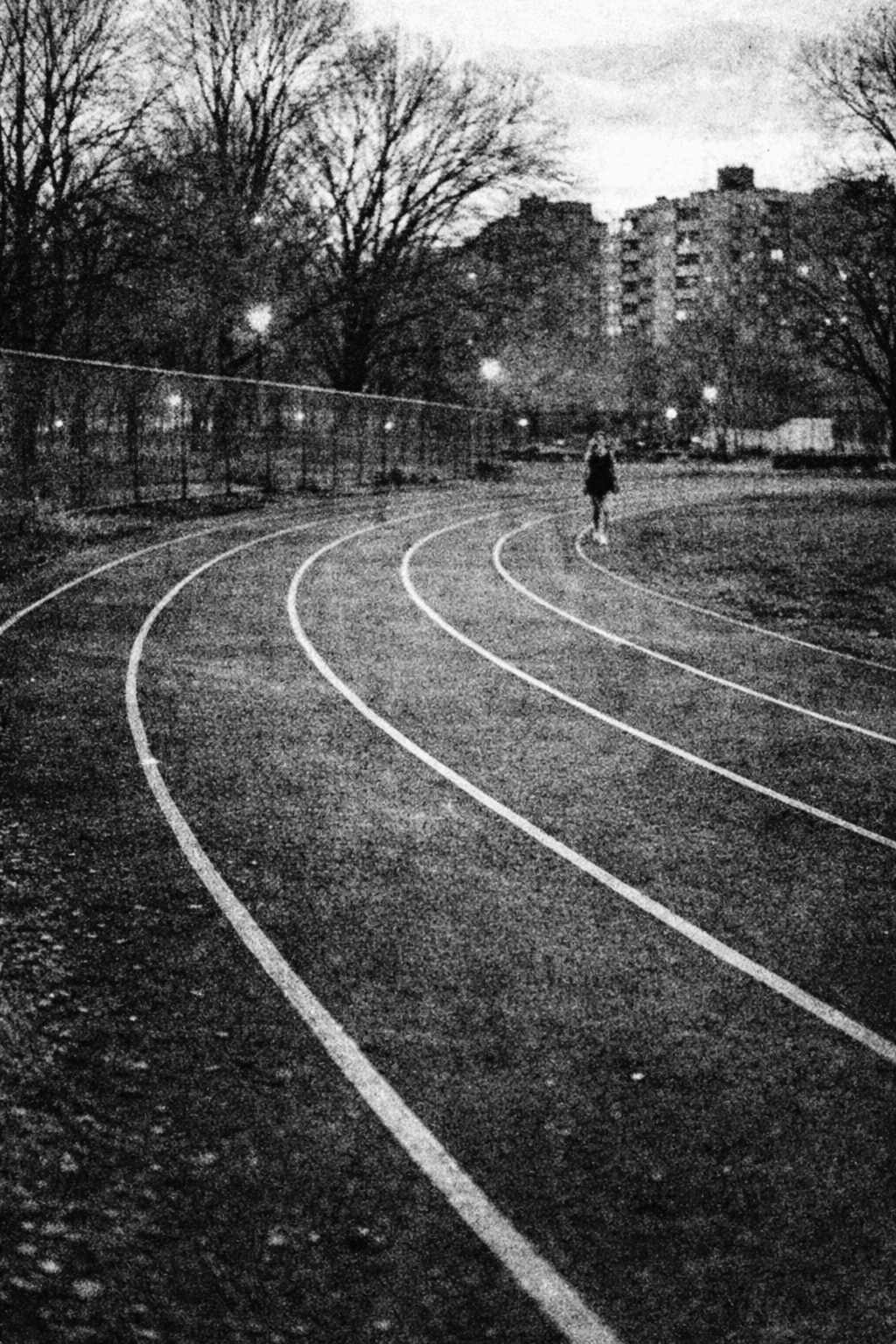
The track at McCarren Park doesn't announce itself. It sits in the northeast corner of the park, between the soccer fields and the Lorimer Street entrance, a rubberized oval that smells faintly of hot rubber in summer and something close to nothing in March. At 5:45 on a Tuesday evening, it belongs to a few dog walkers and a man doing push-ups near the long-jump pit.
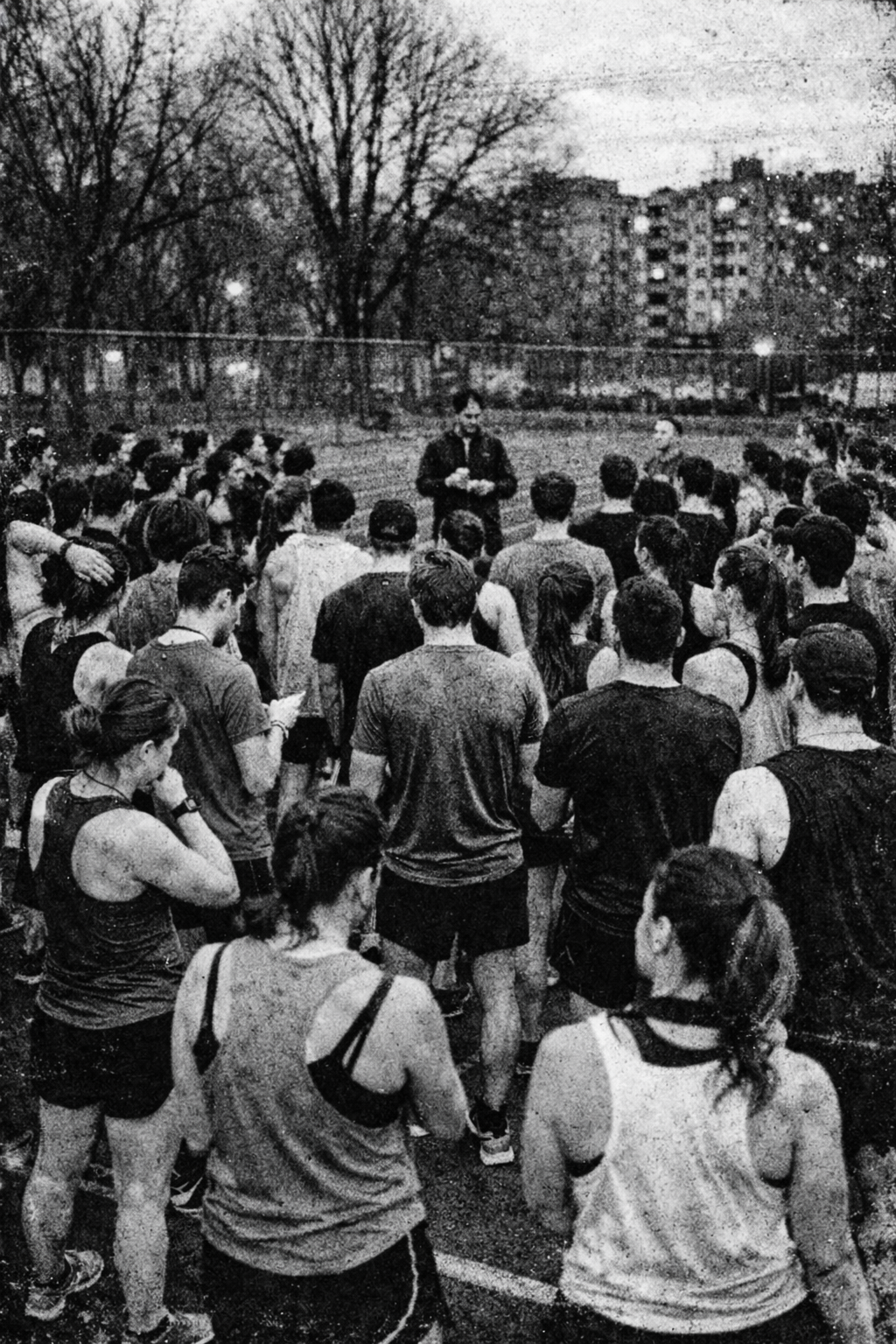
By six o'clock, the composition changes. They arrive individually at first (a woman in an Arc'teryx vest adjusting her watch, two guys in matching shorts stretching against the chain-link fence) and then in clusters, and then in a steady current that makes it look, from a distance, like the park is inhaling. By 6:15, there are eighty people standing in a loose half-circle around a man in a beanie who is, at this moment, the most important person in their week.
The briefing is fast: three pace groups, the route, a reminder about the water fountain at the turnaround on Kent Avenue. Someone yells something about post-run tacos and gets a cheer that's louder than anything that follows. Then the beanie nods, the half-circle compresses into something that resembles a start line, and they go.
From the outside, it looks like running. From the inside, the part the dog walkers can't see, it is the most organized gathering most of these people will attend this week. Some of them have been coming every Tuesday for two years. Some of them showed up tonight for the first time, having found the club's Instagram page at 2 AM while lying in bed in an apartment where no one else lives.
Nora moved from Columbus in September of two years ago, for a consulting job that had an office on Fulton Street with exposed brick and a coffee machine that made oat milk lattes. The office closed in December. (Not the company; the office.) Her team scattered into their apartments, their time zones, their Slack channels. She kept the apartment in Greenpoint because the lease was signed and because she'd told everyone back home she was moving to New York.
What she didn't realize at the time was that the office had been her primary outlet for connection - the proximity, not the work itself. The lunch runs, the hallway conversations, the Thursday drinks that turned into Friday plans. The workplace is now the single most common place Americans make close friends, ahead of neighborhoods, churches, and every club or organization. Which means that when the workplace becomes a Slack channel and a biweekly Zoom, the primary friend-making machinery goes with it.
The first six months were fine. Fine in the way that word covers when there's nothing specifically wrong but also nothing holding the days to each other. She worked from a desk she'd bought off Facebook Marketplace. She went to the grocery store. She called her mom on Sundays.
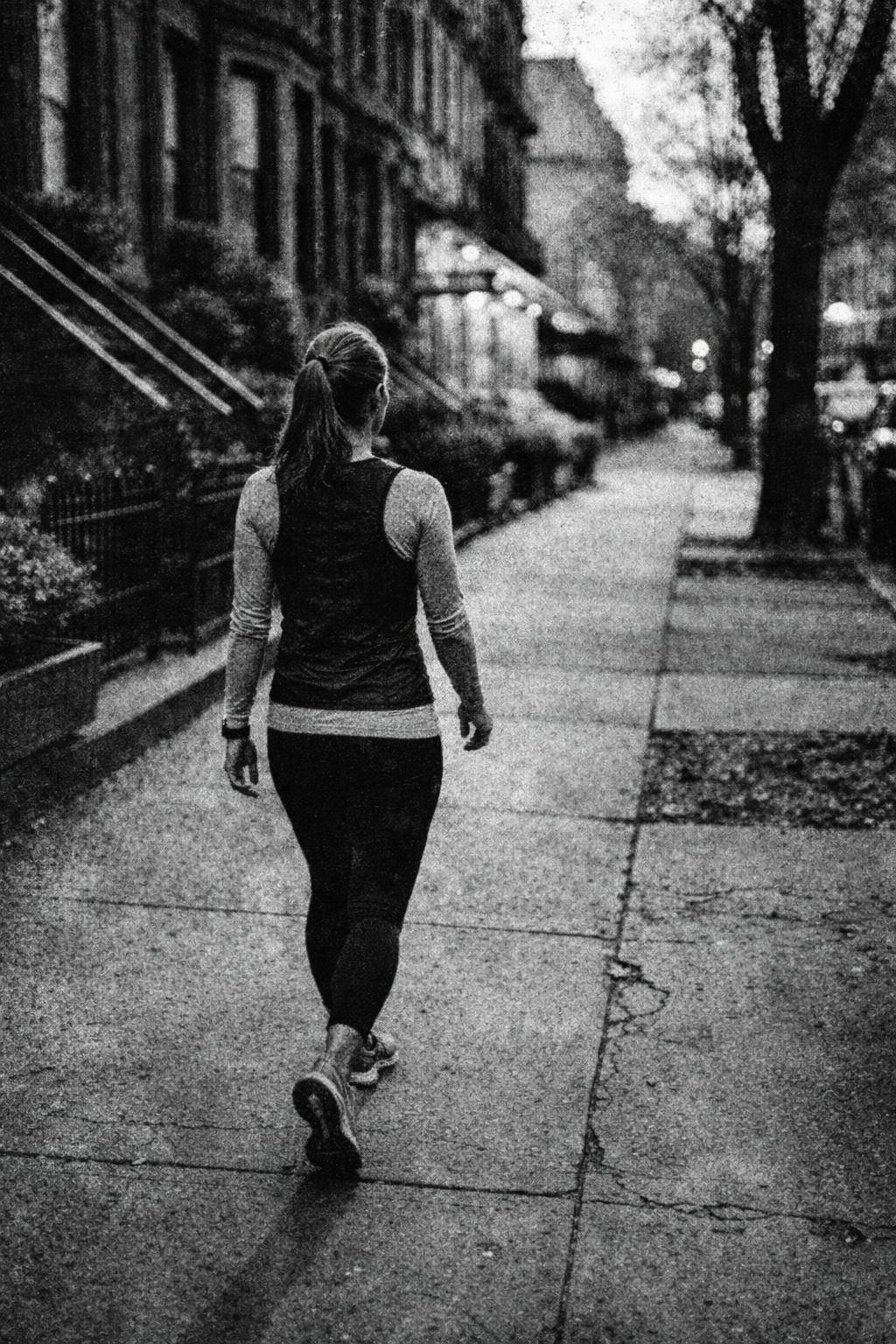
A week in Nora's world works like this. Monday, she runs alone: four easy miles along the waterfront, Kent Avenue to the Williamsburg Bridge and back, with a podcast about something she'll forget by Wednesday. Tuesday is club night. She leaves her apartment at 5:40, walks the seven blocks to the park, and spends the first fifteen minutes in the part of the evening she likes best, the milling around. Who ran what over the weekend. Whose knee is acting up. Who's doing the Brooklyn Half.
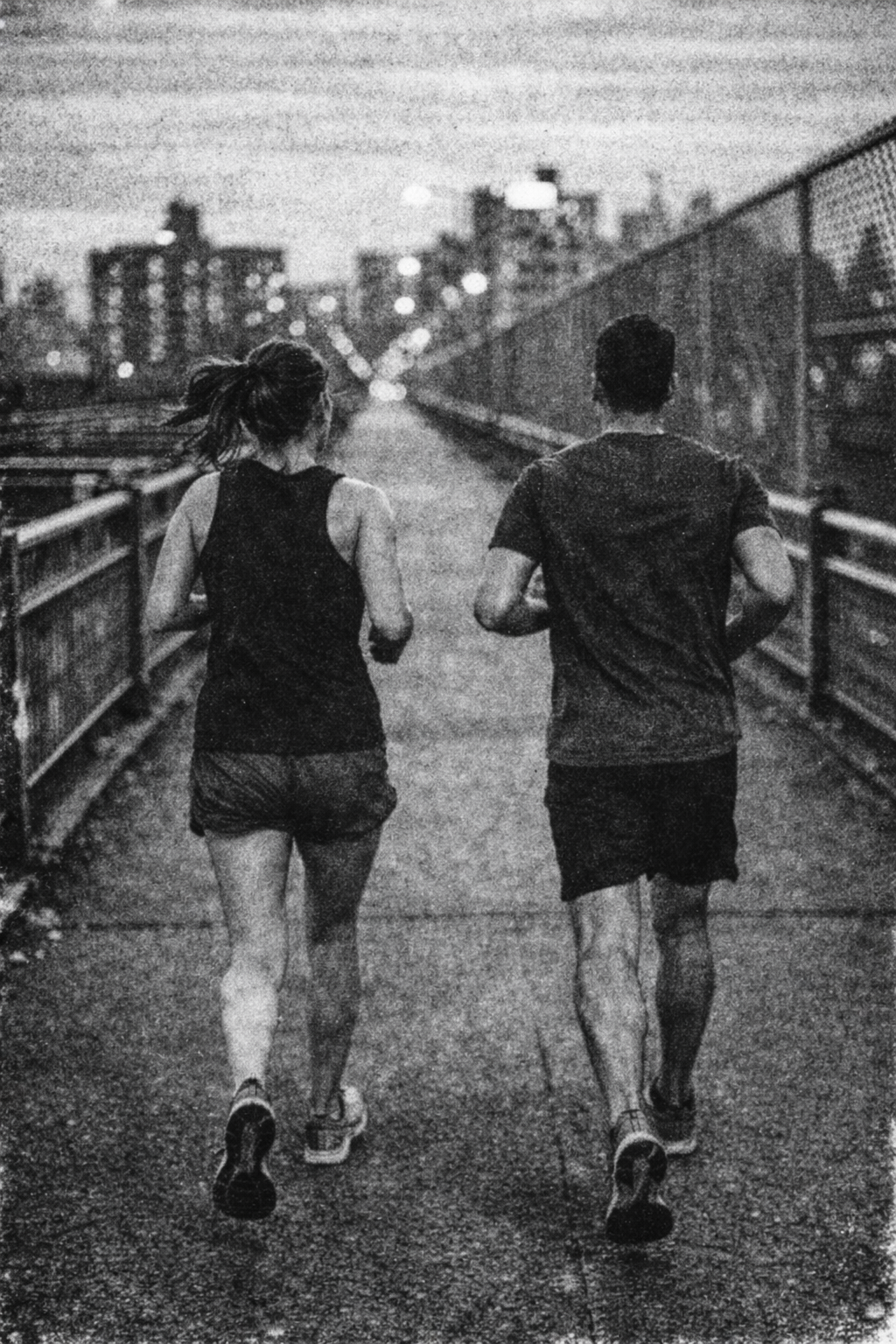
The run itself is forty-two minutes, give or take. She's in the middle pace group, which is where the dynamics are best: fast enough to feel like training, slow enough that you can talk in full sentences. The conversations are fragmented by breathing, which is one of the reasons they work. You're not sitting across from someone performing eye contact. You're side by side, looking ahead, and the talking comes in pieces: a story about a landlord, a question about shoes, a long quiet stretch over the Pulaski Bridge where nobody says anything and it doesn't feel strange.
Thursday is the optional second run, faster, smaller, less conversational. Saturday is the long run, which ends at a coffee shop on Franklin Avenue where ten to fifteen of them take over a corner and sit in their damp clothes for an hour and a half. This is the real meeting. This is where she learned that James used to teach high school history, that Priya is applying to grad school, that Marcus has been separated from his wife since August and hasn't told anyone except the people at this table.
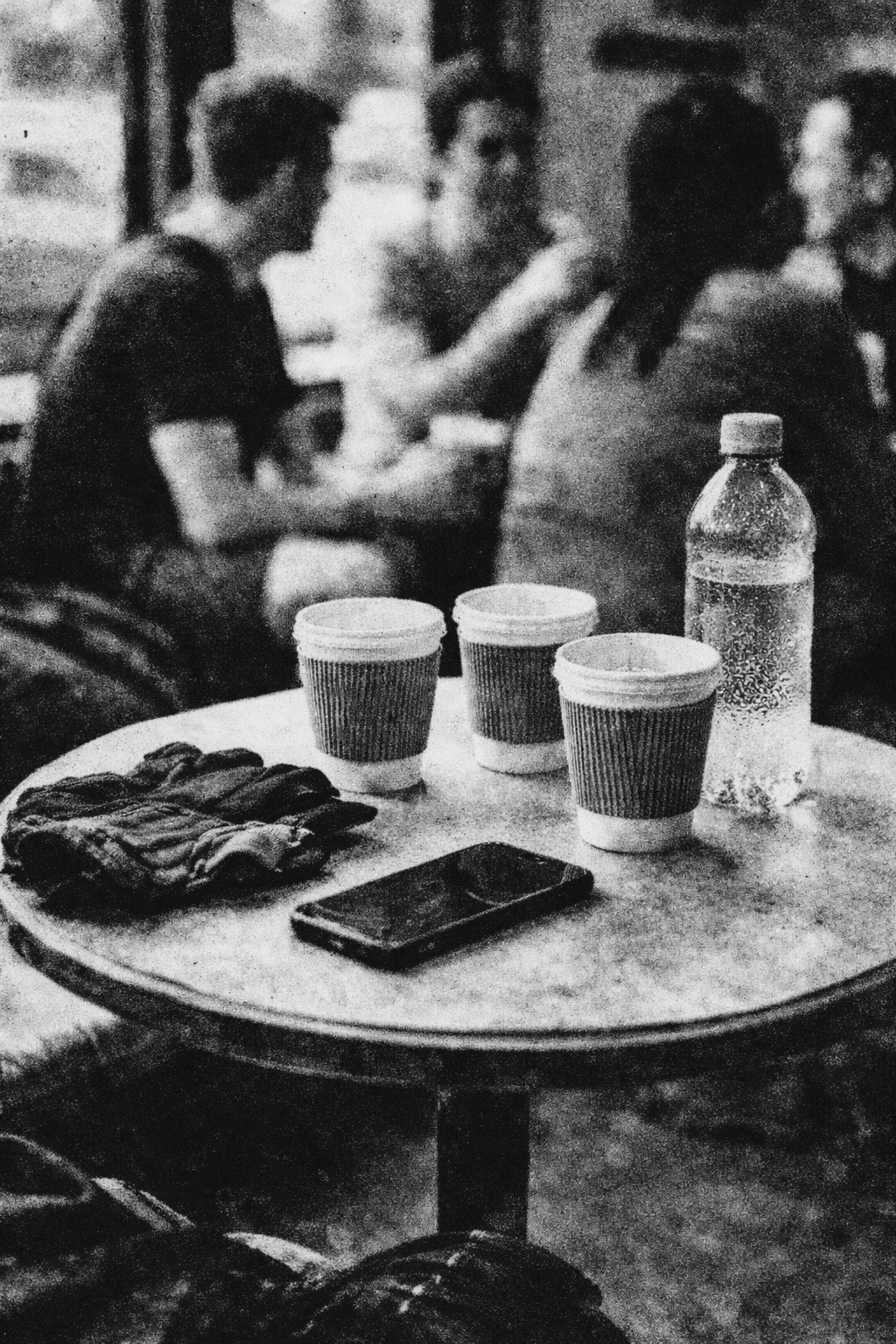
The unspoken rules are exact. You don't show up late to the briefing. You don't wear headphones during the group run. You congratulate someone's Strava post within the day: the little acknowledgment, a kudos, an emoji, a "nice one" on the Tuesday night recap. It sounds trivial, but people who receive that micro-affirmation run more often; researchers have measured it. The feedback loop is quiet but self-reinforcing: show up, run, post, receive recognition, feel known, repeat. The platform didn't set out to treat loneliness, but it is what responded to the treatment.
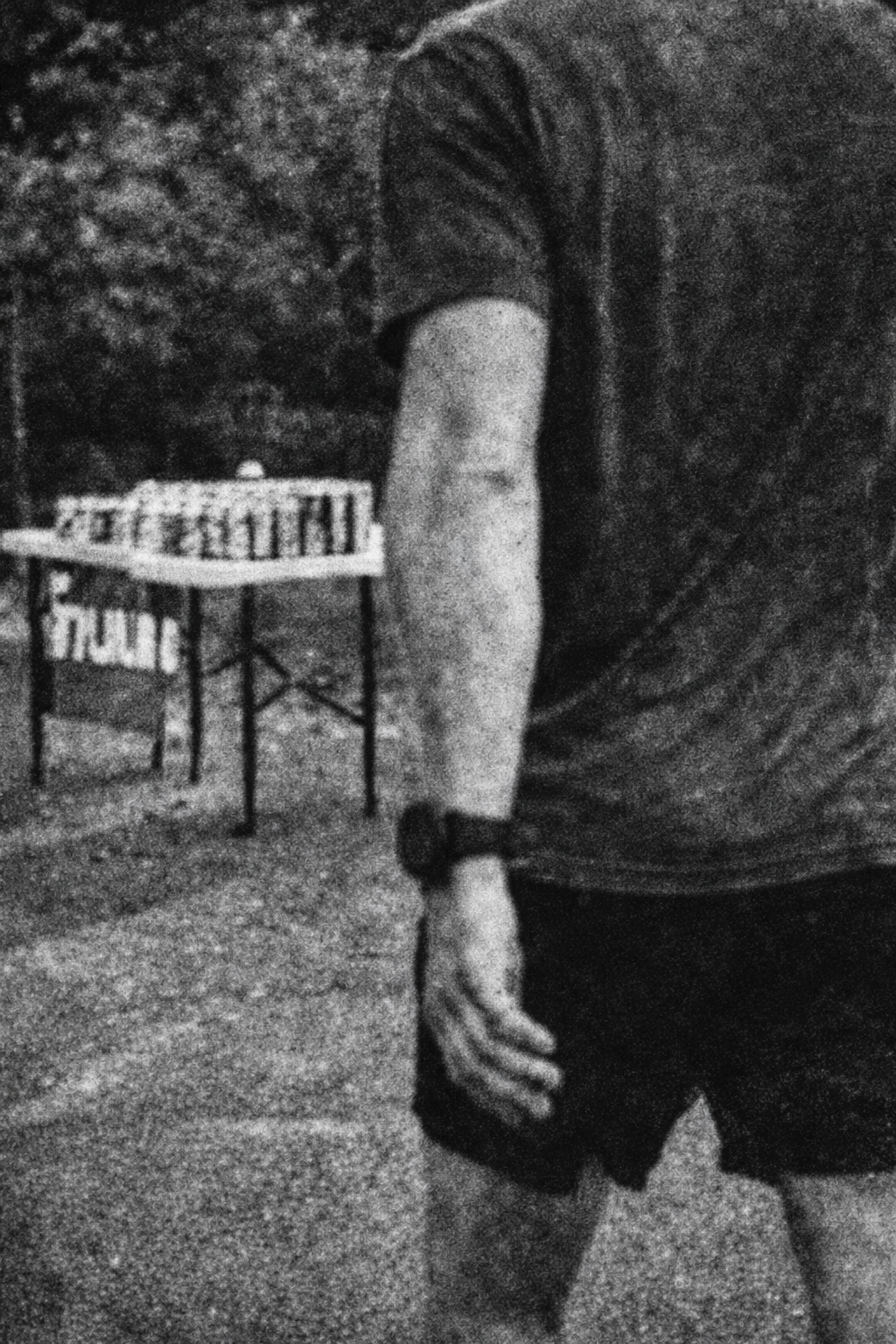
Last month there was a Celsius thing tied to some Strava challenge, an energy drink activation at the start of one of the Saturday routes. A banner, a folding table, cans of something tropical-flavored in a cooler, a woman with a camera.
Nora grabbed one because it was there, drank half before the run, forgot about it by mile two. The brand tagged the club on Instagram, and a few people reposted it, but she didn't think about it long enough to form an opinion. The run was good, and the coffee after was better.
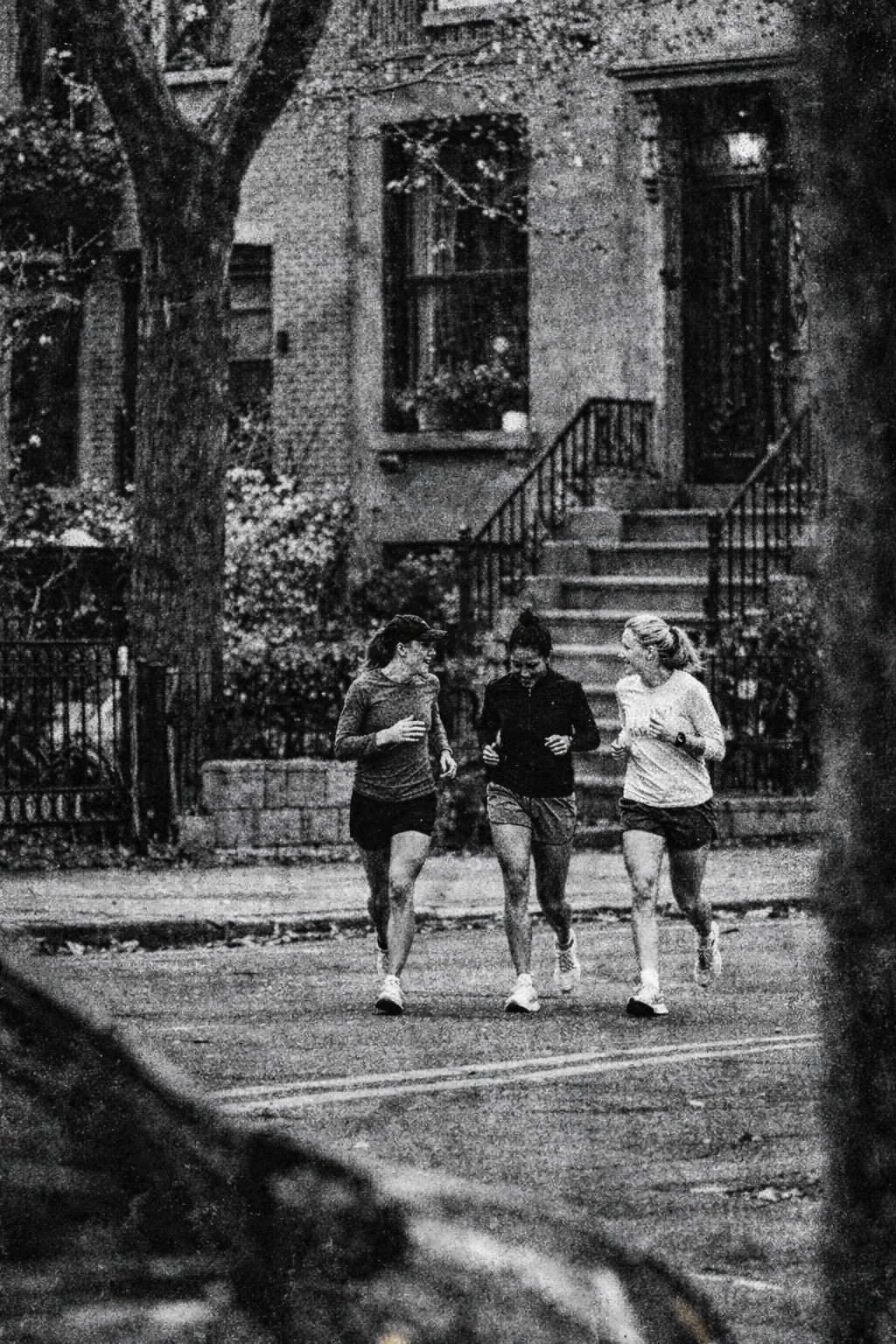
There is a thing Nora says sometimes when she's three-quarters through a Saturday long run and the conversation has moved from easy subjects to the kind of thing people only say when their defenses are down from mile nine.
She says her grandmother had her church. Every Sunday, same pew, same people, same casserole rotation for sick neighbors. Her grandmother was one of the seventy percent of Americans who belonged to a church when she was Nora's age. She didn't think of it as belonging. She thought of it as going to church. She knew the names of thirty families within a six-block radius. She organized the spring rummage sale every April for twenty-two years.
Nora has Tuesday run club. She knows the names of forty people, their Strava handles, their injury histories, their coffee orders. She has organized exactly nothing, but she shows up, and she is known.
She's aware of the gap. She knows the church was a civic institution that ran food banks and visited the elderly and held people's families together through births and deaths. She knows the run club is (she's not stupid) partly a marketing channel. She knows that the group she has anchored her life around was not, in the first instance, assembled for her.
She also knows she felt nothing for nine months, and now she feels something every Tuesday.
She'd call it getting by.
A hundred and eighty years ago, a different displacement, young workers flooding into cities during the Industrial Revolution, produced a different response: the YMCA. A civic institution that constructed gymnasiums, invented basketball, and served twenty-one million people through ten thousand branches. Its allegiance was to its members. It created permanent third place: buildings, pools, programs that outlasted any one generation.
The branded run club is the commercial version. It operates a folding table on a city sidewalk.
The conditions that produced Nora's life are not subtle. A country that watched its civic institutions thin out over half a century (the churches, the lodges, the leagues, the unions) and then, when millions of young people moved to cities where they knew no one for jobs they'd perform alone from their apartments, left them to find connection wherever they could. That they found it on a rubberized track in a park, organized by volunteers who happened to attract a brand, is not a failure of character. It is an artifact of structure.
The question is not whether Nora's people are real; they are, and she would die on that hill. The question is what it means that the most robust gathering spots available to a twenty-eight-year-old professional in one of the most expensive cities on earth is a free run on a city sidewalk (a sidewalk that technically requires a permit for groups over twenty, in a park system that now issues specific running group event permits because the clubs got too big to ignore) powered by a fitness tracking app, with a folding table of energy drinks at the start line.
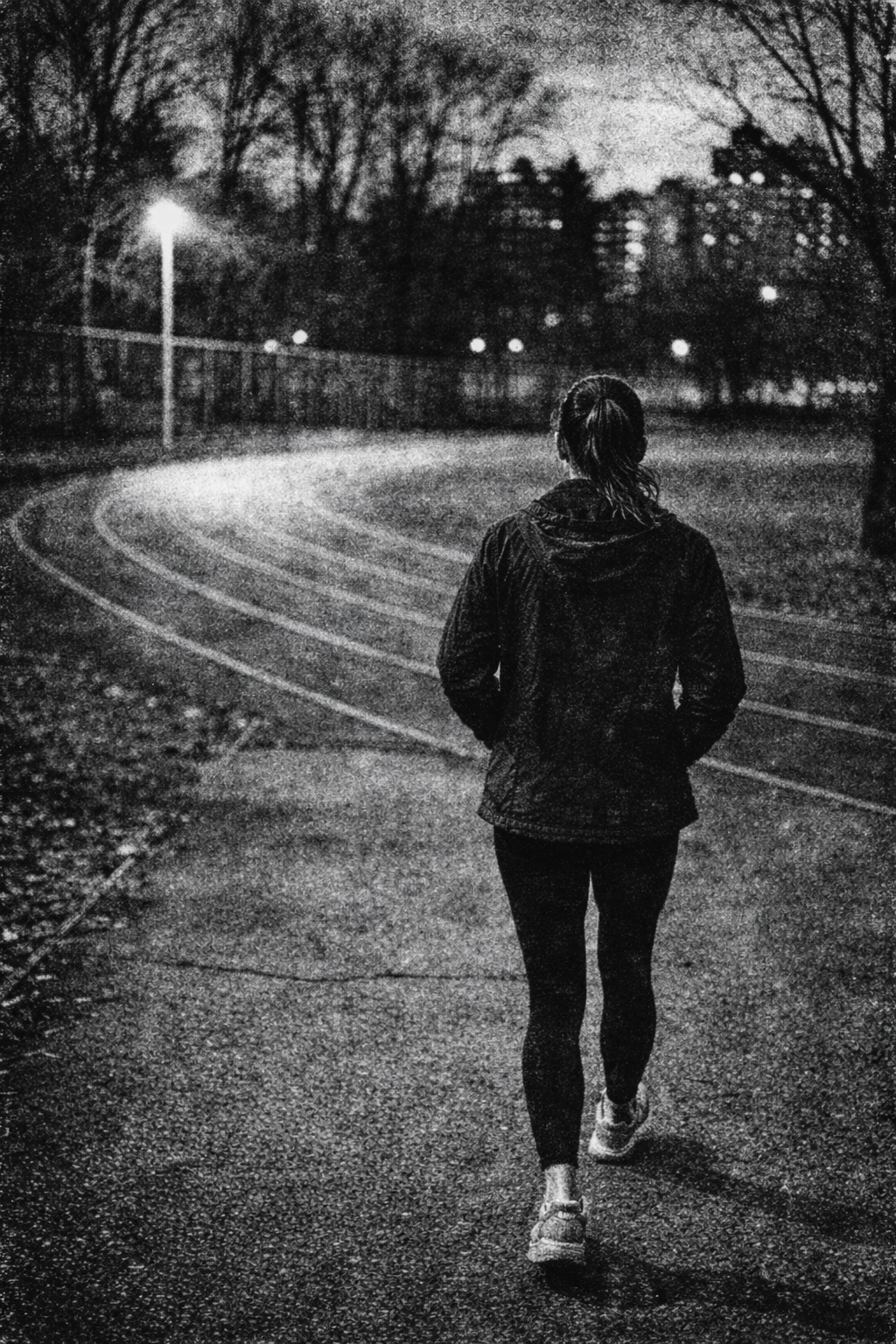
Her grandmother would have had a word for what Nora has.
She just would have been confused about why a corporation was involved.
This profile is a composite portrait. All quotes are real words spoken or written by real people in public forums. The character who carries them is representative, not biographical.
100% Human. Cultural fluency, one person at a time.